There is a moment most homeowners recognize. The tech hands you a quote, and instead of relief you feel a question forming: am I about to spend real money on a system that will do this again next summer?
That deserves a better answer than a gut feeling. Replacing too early wastes years you already paid for. Waiting too long means buying repairs that get rolled into a new unit anyway, usually during a July heat wave.
Below is the framework contractors use internally: age, repair economics, refrigerant, and the softer signals that a system is finished, plus approximate North Texas cost ranges so a quote holds no surprises.
Start With the Number on the Data Plate
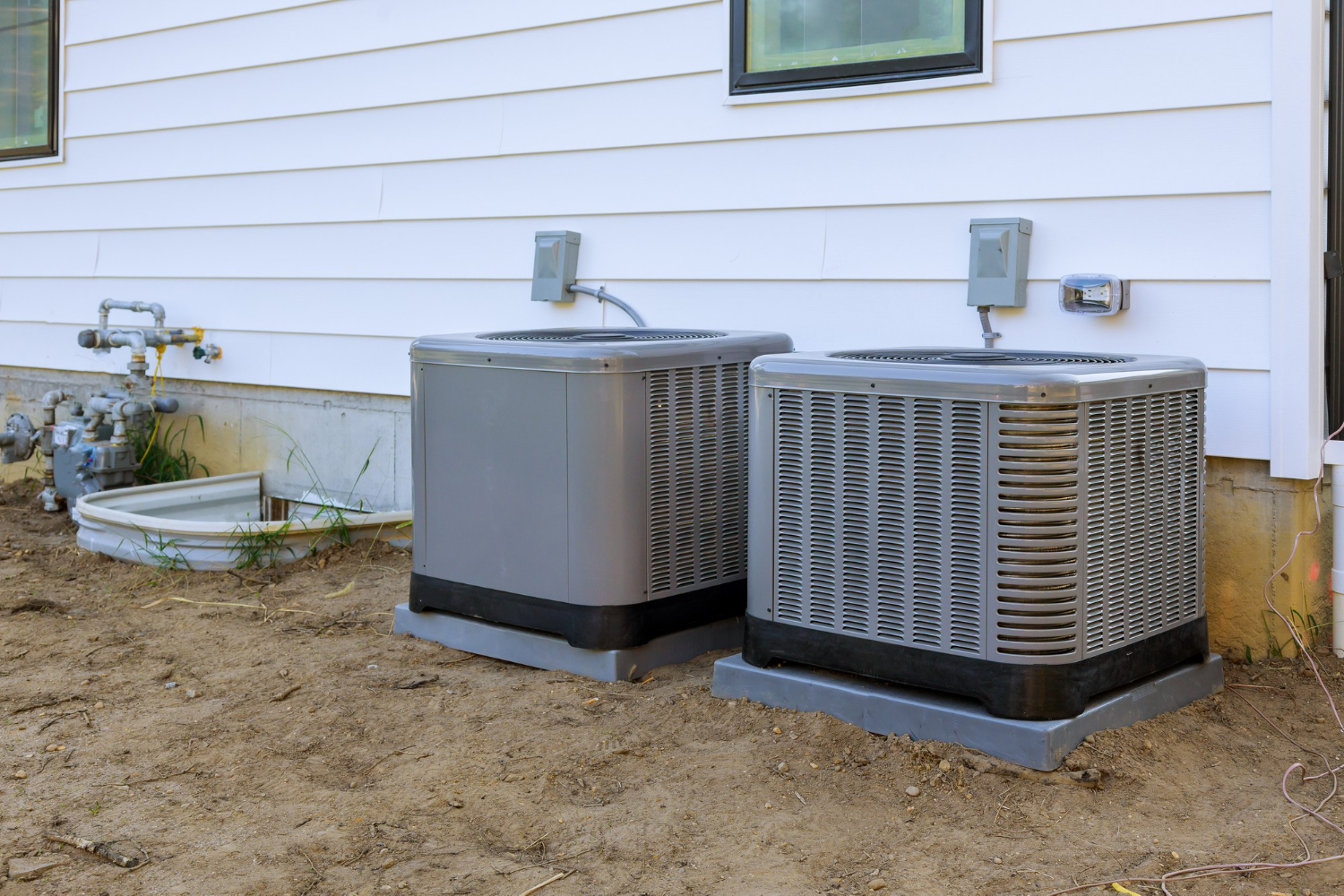
Look at the sticker on your outdoor unit. Manufacturers encode a build date, usually readable in the serial number. If you cannot find it, a technician can.
Here is roughly how age maps to the decision in our climate, where cooling season runs long and equipment logs far more hours than up north:
- Under 10 years: Repair. Parts are available and life remains.
- 10 to 14 years: Depends. Small parts, fix it. A compressor or coil, run the numbers.
- 15 to 20 years: Replacement is usually the better buy, especially after a prior failure.
- Over 20 years: Past design life. Plan the replacement instead of reacting to it.
Gas furnaces often outlive condensers, so plenty of homes have a 22-year-old furnace paired to a newer AC. Workable, but not ideal, since matched systems perform better and share a warranty.
The Repair-or-Replace Math
Two rules of thumb do most of the work.
The percentage rule. If one repair costs more than about a third of a comparable new system, replacement usually wins. Past half, it is rarely close. Sinking $4,000 into a 17-year-old unit to postpone an $11,000 decision by two seasons is a poor trade.
The age-times-cost check. Multiply the equipment’s age in years by the quoted repair cost. Above roughly $5,000, replacement deserves serious thought. A $400 capacitor on a 9-year-old system scores 3,600 and is clearly a repair. A $1,200 fix on a 16-year-old unit scores 19,200 and is clearly not.
Neither rule is a law. A well-maintained 14-year-old system with one failed part can be worth saving. If you are hesitating, though, these numbers usually confirm what you already suspect.
Refrigerant Changes the Equation
If your outdoor unit was installed before roughly 2010, it likely runs R-22. Production and import of R-22 ended in the United States in 2020, so the only supply now is reclaimed or stockpiled, and the price reflects that.
That matters because leaks are common in older coils and line sets. On an R-22 system, a leak repair plus a recharge can cost more than the unit is worth, with no guarantee the next leak is far off. R-22 also cannot simply be swapped for a modern refrigerant.
Newer systems use R-410A, and the industry is transitioning again toward lower-global-warming refrigerants such as R-454B. That affects new equipment pricing, not what is already in your yard. Ask which refrigerant a proposed system uses.
Signs Beyond Age Worth Weighing
Age and refrigerant set the frame. These fill it in.
Bills climbing season over season. Compare the same month a year apart, adjusting for rate changes. Efficiency fades gradually, so a steady rise with no change in habits means the equipment is losing ground.
Service calls stacking up. One repair a year is normal. Three calls in two seasons means components are failing in sequence, which they tend to do near the end of a system’s run.
Rooms that never match. If upstairs runs five degrees warmer than downstairs no matter what you do, the cause is capacity, airflow, or duct design. Sometimes that is a duct repair fix rather than new equipment, and a good contractor says so.
Humidity you can feel. An aging or oversized system cools air without pulling enough moisture out. If 74 degrees feels clammy in August, it is short-cycling rather than running the long, steady cycles that dehumidify.
New noise. Grinding, screeching, or a hard electrical hum points to bearings, a failing capacitor, or a compressor working against itself.
Losing ground on the hottest days. Running nonstop and still drifting above setpoint during a 105-degree stretch means capacity is gone.
Typical North Texas Replacement Cost Ranges
These are approximate installed ranges around Denton County, useful for planning only. Real pricing depends on your home, and no honest contractor quotes a system without seeing it.
System replaced | Approximate installed range | Notes |
Condenser and coil only | $5,500 – $9,500 | Keeps existing furnace; not always advisable |
Gas furnace only | $4,500 – $8,500 | Varies by efficiency and venting |
AC and gas furnace, full split system | $9,500 – $16,500 | Most common replacement |
Heat pump with air handler | $10,000 – $18,000 | Strong fit for mild winters |
High-efficiency variable-speed | $16,000 – $26,000 | Modulating, higher SEER2 |
Ductwork replacement, added on | $3,000 – $9,000 | Depends on size and attic access |
Efficiency ratings move these numbers a lot. A baseline single-stage system and a modulating high-SEER2 system doing the same job can differ by thousands, and payback depends on how long you stay.
What Moves Your Quote, and How Financing Fits
Two houses on the same street can get quotes thousands apart.
Tonnage and load. Proper sizing comes from a load calculation using square footage, insulation, window area, and orientation, not from matching the old unit’s label. Oversized equipment short-cycles and leaves your house humid.
Ductwork condition. Crushed, undersized, or leaking ducts undermine any new system. If static pressure reads high, duct work belongs in this scope rather than next year’s budget.
Electrical. Older homes may need a new disconnect, a correctly sized breaker, or updated wiring. Variable-speed equipment sometimes needs surge protection to keep the warranty intact.
Attic access. Most North Texas air handlers live in the attic. A tight pull-down ladder, a low roof pitch, or a unit set deep behind trusses adds hours of labor, sometimes plus a new platform or drain pan.
Add-ons. Line set replacement, a new pad, thermostat upgrades, safety switches, and permitting show up as line items. Ask which are code requirements and which are optional.
Financing spreads the cost into a monthly payment, which is how most planned replacements happen without draining savings. Rite NOW offers it. Compare total scope rather than monthly figures, since two quotes with similar payments can cover very different work.
When to Call a Pro
You can gather most of the inputs yourself. Find the equipment age, pull twelve months of utility bills, list every repair from the last three years, and note which rooms are uncomfortable and when. That preparation makes any consultation more useful.
What you should not do is diagnose a compressor, judge refrigerant charge, or size a system by rule of thumb. Refrigerant handling requires EPA certification, the outdoor unit holds a lethal charge in its capacitor even with the breaker off, and sizing errors are permanent once installed. Ask every contractor for a written load calculation, a static pressure reading, and an itemized scope. Anyone who will not provide those is guessing, and you live with it for 15 years. Afterward, a maintenance membership protects the investment.
Frequently Asked Questions
How long does an HVAC system last in Texas?
Expect roughly 12 to 15 years for air conditioners and heat pumps here, since our cooling season is long and equipment piles up run hours. Gas furnaces commonly reach 15 to 20 years because they work only a few months a year. Steady maintenance pushes both toward the higher end.
Should I replace just the outdoor unit to save money?
Usually not. Indoor and outdoor components are rated as a matched pair, so pairing an old coil with a new condenser costs efficiency, can void warranty coverage, and often fails again at the older half. It makes sense only when the indoor equipment is genuinely recent.
Is a heat pump a good choice in North Texas?
Yes, for most homes. Winters here are mild enough that a heat pump covers the majority of heating hours efficiently, with supplemental heat for hard freezes. Dual-fuel setups pairing a heat pump with a gas furnace work well when you want gas heat for the coldest stretches.
What size HVAC system does my house need?
That comes from a Manual J load calculation using square footage, insulation, window area and orientation, ceiling height, and duct design. Copying the old tonnage repeats any sizing error already present. Oversized equipment cools fast, shuts off early, and leaves your home damp.
Get a Straight Answer Before You Spend
If you are weighing a repair quote against replacement, Rite NOW AC, Heating & Plumbing will measure what matters and tell you honestly which way the numbers point. We serve Denton, Corinth, Argyle, Sanger, Lake Dallas, and communities across North Texas, handling everything from AC repair to heat pump installation and furnace installation. Call (940) 213-1989 for an in-home assessment.