
Carbon monoxide is the one household hazard your senses cannot detect. It has no color, odor, or taste, and the early symptoms are mild enough that most people blame a long week or a passing bug.
That combination is what makes it dangerous. A furnace with a cracked heat exchanger, or a water heater that cannot vent properly, keeps running and keeps looking normal while producing gas nobody notices until someone gets seriously ill.
The good news is that the risk is manageable, with working detectors, annual appliance checks, and a clear plan for the moment an alarm goes off. This guide covers all three, written for how homes in Denton County are actually built and heated.
What Carbon Monoxide Actually Is
CO is a byproduct of incomplete combustion. When a fuel burns without enough oxygen, it produces carbon monoxide instead of harmless carbon dioxide.
The gas mixes throughout a room rather than collecting at the ceiling. Once inhaled, it binds to hemoglobin far more readily than oxygen does, displacing the oxygen your organs need while you feel only vaguely unwell.
Properly vented appliances send those byproducts outside. CO becomes a household problem when the venting fails, the combustion goes wrong, or fuel is burned indoors with no vent at all.
Where It Comes From in a Home
Every fuel-burning device is a potential source. In this region that usually means:
- Gas furnaces, particularly attic units that go untouched for six months a year
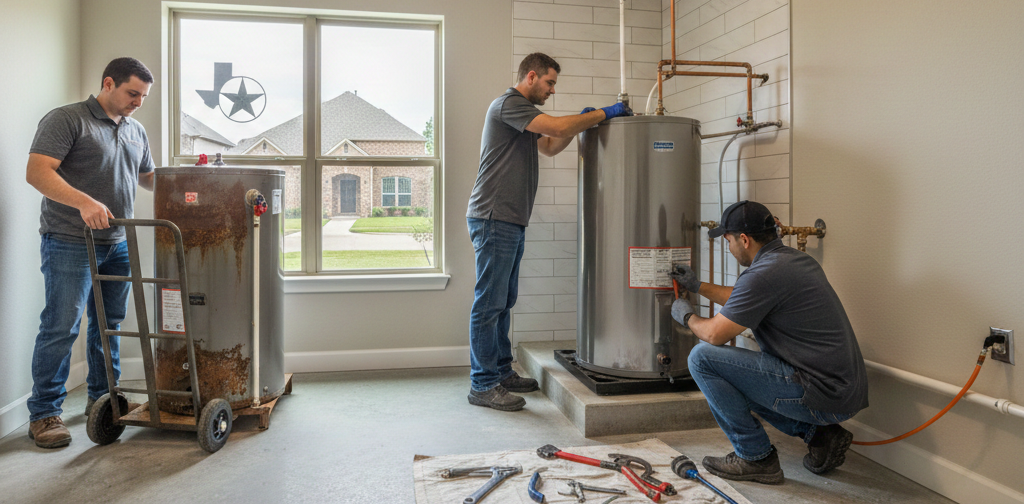
- Gas water heaters, especially in closets and garages where combustion air is tight
- Gas ranges and ovens, hazardous when used for heating or run without ventilation
- Fireplaces, wood or gas, with a partially closed damper or a dirty chimney
- Attached garages, where a vehicle warmed up with the door open still pushes exhaust indoors
- Portable generators and unvented space heaters, a leading cause of severe poisoning during winter outages
Why Cold Weather Is Peak Season
Three things line up between November and February in North Texas.
Furnaces come out of a six-month idle stretch. Rodent nests, rust, cracks, and blocked flues that developed over spring and summer reveal themselves the first week the system runs hard.
Houses also get sealed up. Weatherstripping that lowers your bill also cuts the makeup air an atmospherically vented furnace or water heater needs to draft properly, which can pull exhaust down the flue.
Then a hard freeze arrives, the kind that cut power in February 2021 and January 2024, and people improvise. Generators in garages, grills indoors, and space heaters in closed bedrooms cause more emergencies than equipment failure.
Recognizing the Symptoms
CO poisoning imitates the flu almost exactly, minus one detail: there is no fever.
- Headache, often dull and persistent
- Dizziness or lightheadedness
- Nausea or vomiting
- Fatigue and weakness
- Confusion or trouble concentrating
- Blurred vision
- Shortness of breath during light activity
Watch the pattern more than any single symptom. If several people feel unwell at once, if pets seem lethargic, or if everyone improves after hours away from home and declines on returning, treat that as a CO concern and get outside.
Infants, older adults, pregnant women, and anyone with heart or lung conditions react at lower concentrations.
Detector Placement and Replacement
Texas requires CO alarms in most newer construction, but many older homes across Denton, Aubrey, and Sanger predate those rules. Coverage matters more than the code year.
Location | Install a detector? | Notes |
Outside each sleeping area | Yes, required minimum | Within 10 feet of bedroom doors |
Inside bedrooms | Recommended | Best where doors stay shut at night |
Every level of the home | Yes | One per floor minimum |
Near an attached garage door | Yes | Catches vehicle exhaust early |
Hall by a gas water heater closet | Yes | Backdrafting shows here first |
Directly above a furnace or stove | No | Within 15 feet causes nuisance alarms |
Kitchens and bathrooms | No | Humidity and fumes cause false trips |
Attic or unconditioned garage | No | Temperature swings shorten sensor life |
Mount units at knee height, chest height, or on the ceiling; CO diffuses rather than layering.
Three habits keep them honest. Press the test button monthly. Replace batteries annually unless the unit has a sealed ten-year battery. And replace the whole alarm every five to seven years, or by the date stamped on the back, since the sensor degrades whether or not it ever sees gas. Combination smoke and CO units follow the CO sensor’s shorter lifespan.
If an Alarm Sounds, Do This
Treat every alarm as real. There is no safe way to investigate.
- Get everyone outside immediately, including pets. Do not stop to open windows, gather belongings, or find the source.
- Call 911 from outside, or your gas utility’s emergency line. Fire departments carry meters and will check the house.
- Do not go back in for any reason until responders tell you the house is clear.
- Seek medical care if anyone has a headache, nausea, confusion, or is unresponsive. Tell the provider you suspect CO exposure, because it changes how they test.
- Have the equipment inspected before anything gas-fired is relit.
If you also smell gas, add one step: leave the door open behind you and touch nothing electrical, including switches, garage door openers, and phones, until you are well away from the house.
An alarm that chirps once every 30 to 60 seconds signals a low battery or end of life, not a gas event. A repeating pattern of four beeps is the real alarm.
The Equipment Failures Behind Most CO Events
Cracked heat exchanger. This is the metal wall separating combustion gases from the air blowing through your ducts. Years of heating cycles fatigue that metal, and a crack lets exhaust into the airstream. The damage is invisible from outside the cabinet, which is why technicians inspect it during a tune-up.
Blocked or disconnected flue. Bird nests, rust holes, storm debris, and vent pipes knocked loose by attic work all keep exhaust from leaving. Attic furnaces are especially exposed, since a loose vent section can go unnoticed for a full season.
Backdrafting. When a large exhaust fan, a clothes dryer, or a tight house depressurizes the space around an atmospherically vented water heater, the flue can reverse and pull exhaust into the room. Scorch marks above the draft hood are a clue.
Improvised heating. Kerosene heaters, ventless gas logs run for hours, and camp stoves indoors produce CO by design. Generators belong well away from the house, never in a garage even with the door up.
When to Call a Pro
Testing alarms, replacing batteries, keeping the space around gas appliances clear, and refusing to burn anything unvented indoors are all yours to handle.
Everything past that is licensed work. Inspecting a heat exchanger, testing draft, checking gas pressure, and evaluating combustion air require instruments and training. If an alarm has sounded, call 911 or the gas company first and a contractor second. Rite NOW can inspect and repair the furnace, handle gas line repair, and perform annual water heater maintenance with a draft check.
Frequently Asked Questions
Where should carbon monoxide detectors be placed in a house?
Put one outside every sleeping area, one on each floor, and one near the door to an attached garage. Keep them at least 15 feet from furnaces and stoves to avoid nuisance alarms, and skip kitchens, bathrooms, attics, and unconditioned garages entirely.
How long do carbon monoxide detectors last?
Most units last five to seven years, and the sensor expires on that schedule regardless of use. Check the manufacture date printed on the back. When the alarm chirps at regular intervals with a fresh battery installed, it is telling you the unit itself needs replacing.
Can a furnace really leak carbon monoxide?
Yes. A cracked heat exchanger or a blocked flue lets combustion gases enter the air your blower circulates. The furnace will keep heating normally while it happens, which is why an annual inspection and a working detector matter more than watching for obvious signs.
What does carbon monoxide poisoning feel like?
Headache, dizziness, nausea, fatigue, and confusion, with no fever. The clearest signal is a pattern: several people or pets in the home feeling ill at the same time, and everyone improving once they are outside for a few hours.
Do I need CO detectors if my home is all electric?
Usually yes. An attached garage, a gas fireplace, or a portable generator used during an outage can all introduce carbon monoxide into a fully electric home. A detector near the garage door and one outside the bedrooms is a reasonable minimum.
Talk to a Licensed Technician Before Winter
A combustion and venting check is part of every heating tune-up Rite NOW AC, Heating & Plumbing performs, and a maintenance membership keeps yours on the calendar. Four decades of work in Denton, Corinth, Argyle, Lake Dallas, and the rest of North Texas sit behind that inspection. Call (940) 213-1989 to schedule.