Nobody in Denton is thinking about the furnace during a 95-degree September afternoon. That is precisely the advantage. Service calendars are open, parts are on the shelf, and a technician can spend an unhurried hour with your equipment instead of triaging one emergency after another.
Six weeks later, the picture flips. A front drops overnight lows into the 20s, thousands of North Texas furnaces fire for the first time in half a year, and a meaningful share of them fail on that first call for heat.
This post is not another maintenance checklist. It is the case for timing: why the same service costs you far less stress in early fall, and what a real tune-up covers when a tech has time to do it right.
The First Freeze Creates a Bottleneck
Heating demand in North Texas does not build gradually the way it does further north. It arrives all at once.
For most of October, our furnaces sit idle. Then one cold front pushes through and, within about 48 hours, every home in Denton, Corinth, Highland Village, and Lake Dallas calls for heat on the same evening.
Systems that were quietly failing all along announce themselves at once. Dispatch boards with open slots on Tuesday are full by Thursday, and the queue gets sorted by urgency rather than by who called first.
A homeowner with no heat and a newborn goes ahead of a routine inspection. That is the right call, and it is also why routine work slides to February.
What You Are Really Buying Is a Position in Line
Think of a fall tune-up less as a service and more as insurance against the queue.
Book in September or October and you pick your window. Wait until the temperature drops and you take whatever slot exists, which during a hard freeze can stretch into days for non-emergency work.
This is not about any one company’s staffing. Every reputable contractor in the area works the same compressed weeks with the same finite number of licensed techs.
Small Faults Are Cheap in October and Expensive in January
Most heating failures announce themselves quietly before they announce themselves loudly. A tune-up in mild weather is how you catch the quiet version.
Igniters and flame sensors
A hot surface igniter degrades gradually. It will still light the burners at 60 degrees outside while it is weeks from failing, and a tech testing resistance sees the decline before you do.
Oxidation on the flame sensor produces a similar symptom: the furnace lights, runs 30 seconds, shuts down, and retries. Cleaning it takes minutes during a scheduled visit.
Heat exchanger cracks
This is the one that matters most for safety. A cracked heat exchanger can allow combustion byproducts, including carbon monoxide, to mix with the air moving through your house.
Cracks are found by inspection, not by symptoms. That is why the annual check exists, and why it belongs before months of hard running.
Weak capacitors, tired blower motors, and gas pressure drift
Electrical components fail under load. A capacitor reading below spec usually survives a mild evening, then gives out during a sustained cold stretch when the blower runs nearly nonstop.
Catching that in fall converts a middle-of-the-night emergency heating repair into a scheduled part swap on a weekday.
Parts Are Easier to Get Before the Rush
Supply houses stock seasonally. In early fall the shelves are full and a control board or inducer motor for your specific model is usually available same day.
During a regional freeze event, that changes fast. Common parts move quickly, and components for older or less common systems can take days to source. The 2021 and 2024 freezes made this obvious across the Metroplex, when availability rather than labor became the constraint.
If your system is old enough that parts are already scarce, fall is also the right time to have that conversation before a failure forces a rushed decision about furnace installation.
Your Warranty Probably Expects Annual Service
Read the fine print on your equipment warranty. Most major manufacturers condition coverage on documented annual maintenance by a licensed contractor.
If a heat exchanger or compressor fails inside the warranty period and you cannot produce service records, a claim can be denied. You are then paying full price for a part the manufacturer would have covered.
Documentation matters as much as the work itself. A professional visit generates a dated invoice listing what was inspected, which is exactly what a warranty administrator asks for.
What a Professional Tune-Up Actually Covers
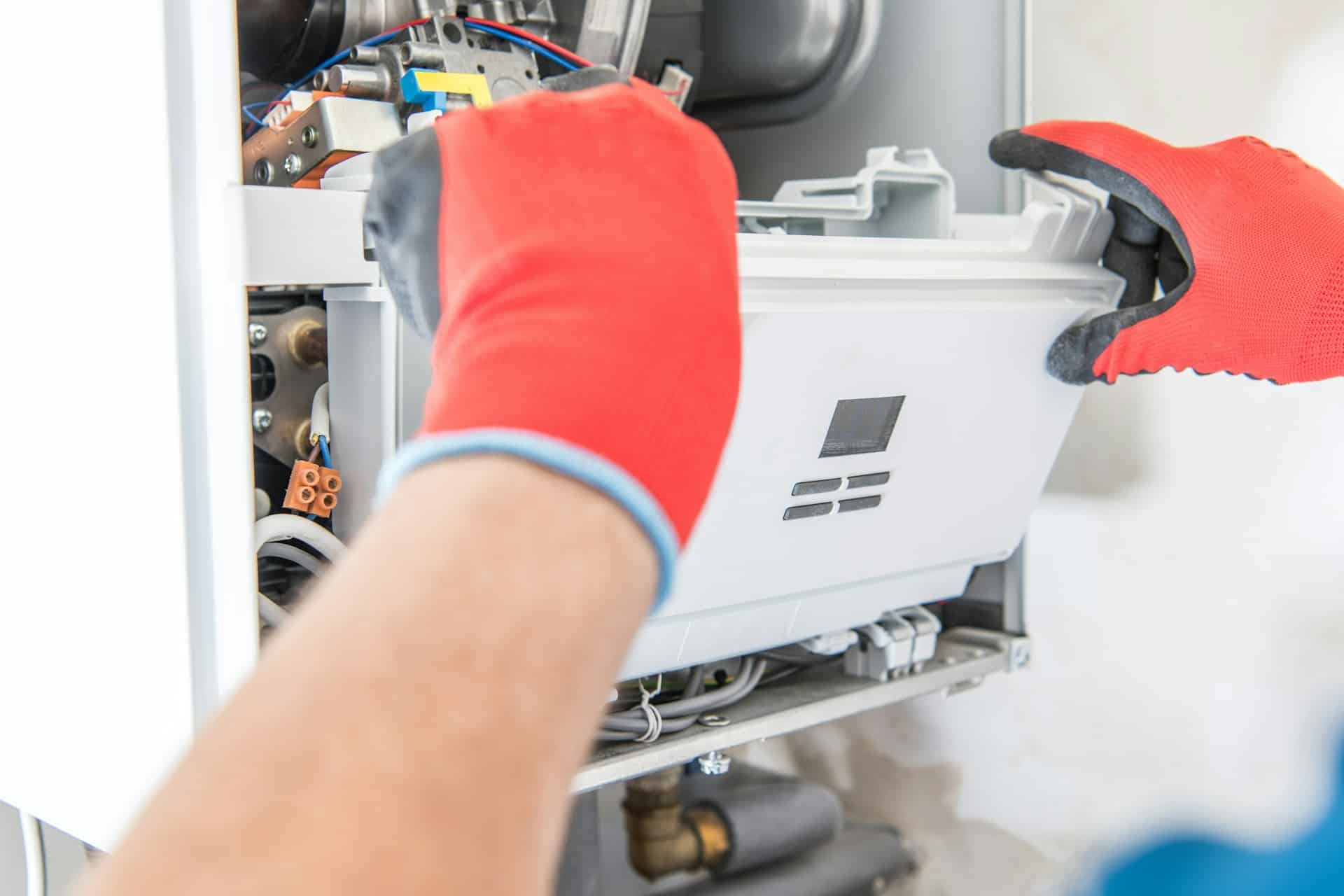
“Tune-up” sounds vague, so here is what the visit should include on a gas furnace. If a company cannot describe its process, that tells you something.
- Inspect the heat exchanger for cracks, corrosion, and separation
- Clean burners and adjust for a stable, correctly colored flame
- Clean or replace the flame sensor and test the ignition sequence
- Verify manifold gas pressure against the manufacturer’s rating
- Test the inducer motor and confirm the pressure switch proves properly
- Check the flue and vent connector for blockage, corrosion, and secure joints
- Measure blower amp draw and inspect the wheel for dust loading
- Test capacitors and tighten electrical connections
- Verify safety controls, including the high-limit and rollout switches
- Confirm temperature rise falls inside the nameplate range
- Check thermostat calibration and staging
- Inspect the condensate drain on high-efficiency units
Heat pumps get a different list, covering defrost cycle operation, reversing valve function, auxiliary heat staging, and refrigerant charge.
Anything that fails those checks becomes a repair conversation while you still have time to think, rather than a decision made at 11 p.m. in a cold house. Scheduling furnace repair on a weekday is simply a better experience.
Book in Fall vs. Wait Until Winter
|
Book in September or October |
Wait until the first freeze |
|
|
Appointment availability |
Your choice of day and window |
Whatever slot is left, often days out |
|
Rate structure |
Standard scheduled pricing |
After-hours and weekend rates common |
|
Parts on hand |
Normal stock, often same day |
Fast-moving items back-ordered |
|
Diagnosis time |
Unhurried, full inspection |
Focused on restoring heat first |
|
Safety findings |
Addressed before heavy use |
Discovered mid-season |
|
Warranty records |
Documented before the season |
Possibly a gap in service history |
|
Household disruption |
None, the house is comfortable |
Cold house while you wait |
When to Call a Pro
Homeowners can and should handle filters, register clearance, storage kept away from the equipment, and a test run on a mild day. A wider walk-through of preparing for winter is worth your afternoon.
The tune-up itself is not a DIY project. Verifying gas pressure, evaluating combustion, and inspecting a heat exchanger require a combustion analyzer, a manometer, and a license to work on gas piping.
Some situations skip the scheduling question entirely. If you smell gas, or a carbon monoxide detector alarms, get everyone out of the house first, then call the gas company and 911 from outside. Contractors come after the hazard is cleared.
Frequently Asked Questions
When is the best time to schedule a heating tune-up in Texas?
September through October is ideal. Your furnace has been idle since spring, technician schedules are open, and any repair the inspection turns up can be handled before the first freeze. Waiting until you actually need heat means competing with every other homeowner who did the same.
How much does a furnace tune-up cost?
Seasonal tune-ups in North Texas typically run somewhere in the $79 to $200 range depending on system type and what the visit includes. Rite NOW runs $79 tune-ups seasonally. Repairs found during the visit are quoted separately, since no honest number exists before someone sees the equipment.
Do I need a tune-up every year, or every other year?
Every year, for two reasons. Manufacturer warranties generally require documented annual service, and combustion safety checks are not meaningful on a two-year cycle. A heat exchanger crack that develops in month 14 goes undetected the entire following winter.
What is the difference between a tune-up and a repair?
A tune-up is a scheduled inspection, cleaning, and testing of a system that is currently working. A repair fixes something that has already failed. The point of annual maintenance is converting future repairs into planned, lower-cost work before they turn into no-heat calls.
Does a maintenance membership actually get me seen faster?
Yes, that is one of its main functions. Members typically receive priority dispatch during peak demand, so a member calling on the first freezing night is placed ahead of the general queue. Memberships usually also bundle both seasonal visits and a repair discount.
Get on the Schedule Before the Rush
Rite NOW AC, Heating & Plumbing has served North Texas families for more than 40 years, and fall is when our heating schedule fills. Call (940) 213-1989 to book a tune-up for your home in Denton, Flower Mound, Argyle, Aubrey, or anywhere nearby, and ask how a maintenance membership moves you up the list when a freeze hits. Done Rite, Done Now.