Every water heater carries a label that answers most of the questions a plumber will ask you: how old it is, how big it is, and what fuel it uses.
Most people never look at it until something goes wrong. Reading it ahead of time helps you decide whether to repair or replace, makes quotes easier to compare, and makes sure the new unit actually fits your household.
Here is where to find the data plate, what each line means, and what to do with the information.
Where to Find the Data Plate
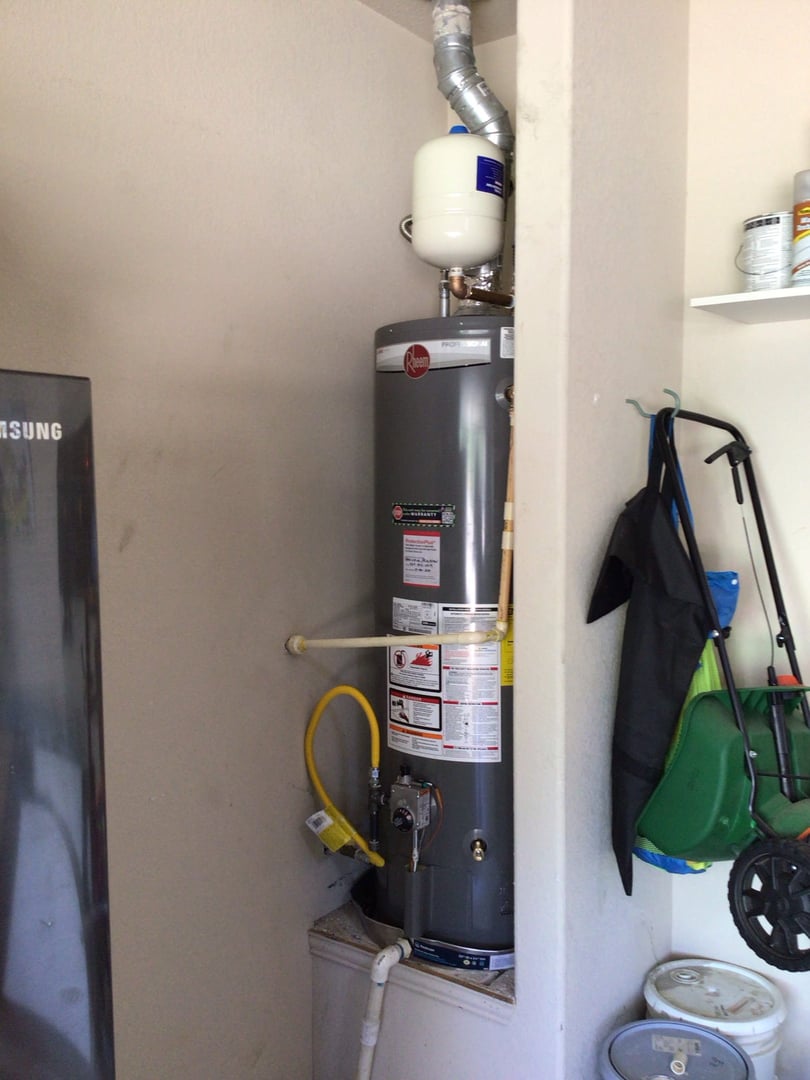
The data plate is a sticker or metal label on the side of the tank. On gas water heaters it’s usually near the bottom, close to the gas control. On electric models it’s often near the top or beside an access panel.
If your heater is in a tight closet or attic, take a photo with your phone instead of trying to read it in place. Use the flash, and get the whole label in the frame.
What Each Line Means
1. Brand and model number
The model number tells a plumber the tank’s size, fuel type and series. It’s the fastest way to look up specifications and replacement parts.
2. Serial number (and the age hiding in it)
Most manufacturers build the manufacture date into the serial number. Many put the month and year, or the year and week, in the first four characters. Some brands use a letter code instead. If you can’t decode it, the brand’s website or a photo sent to your plumber will.
Age is the single most important number on the plate. Most tank water heaters in North Texas last about 8 to 12 years, and hard water pushes many toward the lower end.
3. Capacity in gallons
This is how much water the tank holds, often 40 or 50 gallons in a typical home. Capacity alone doesn’t tell you how much hot water you get, but it’s the starting point for sizing a replacement. Our guide to wrong water heater size problemsexplains what happens when it’s off.
4. Fuel type
The plate will say natural gas, propane (LP) or electric. Gas and propane models are not interchangeable without conversion, and switching between gas and electric means new connections. Our comparison of gas vs. electric water heaters covers the trade-offs.
5. Input rating: BTUs or watts
Gas units list an input rating in BTUs per hour. Electric units list the wattage of the heating elements and the voltage, usually 240 volts. Higher input generally means faster recovery after the tank runs low.
6. Working pressure
This is the maximum pressure the tank is built to handle. If your home’s water pressure runs high, the temperature and pressure relief valve may drip, and the tank wears out faster.
7. Efficiency and first-hour rating
Newer heaters may list a Uniform Energy Factor (UEF) and a first-hour rating, either on the plate or on the yellow EnergyGuide label. The first-hour rating tells you how much hot water the heater can deliver in a busy hour, which is the better number for comparing tanks.
Quick Reference: What the Plate Tells You
On the plate | What it tells you | Why it matters for replacement |
|---|---|---|
Serial number | Manufacture date | Past 8–10 years, replacement usually beats repair |
Capacity (gallons) | Tank size | Starting point for sizing the new unit |
Fuel type | Natural gas, propane or electric | Determines connections and venting |
BTUs or watts | Heating power | Affects recovery time |
Voltage (electric) | Electrical supply | New unit must match the circuit |
Working pressure | Pressure limit | High home pressure may need a regulator |
UEF / first-hour rating | Efficiency and output | Best for comparing options |
What the Plate Means for Repair vs. Replace
If the plate shows a heater under six or seven years old, most problems are worth repairing: a heating element, a thermostat, a dip tube or an anode rod.
If it’s past year eight or ten and showing symptoms like rusty water, rumbling or a damp base, replacement is usually the better use of your money. Our list of 7 signs to replace your water heater before winter walks through those symptoms.
One more thing to check: the space around the heater. Newer models are sometimes a little taller or wider than the one they replace, so measure the closet or platform before you buy.
When to Call a Pro
Reading the data plate is safe and takes a minute. Don’t remove access panels on electric heaters, which expose live wiring, and don’t adjust the gas control beyond the normal temperature setting.
If you smell gas near the heater, leave the house first, then call 911 and your gas utility from outside. If the tank is leaking, shut off the cold water supply if you can reach the valve safely and call for emergency plumbing help.
Frequently Asked Questions
How do I tell how old my water heater is?
Look at the serial number on the data plate. Many brands encode the month and year, or year and week, in the first four characters. If it isn’t clear, send a photo of the plate to your plumber.
What size water heater do I need?
It depends on how many people live in the home and how much hot water you use at the busiest time of day. A family of four often needs a 50-gallon tank, but the first-hour rating is the better guide.
Can I replace a gas water heater with an electric one?
Yes, but it requires a dedicated 240-volt circuit and capping the gas line. It usually costs more up front, so it’s worth comparing both options.
Why does the plumber want a photo of the label?
The label tells them the size, fuel, venting and age before they arrive, so they can bring the right unit and give you an accurate quote.
Is it worth repairing a 10-year-old water heater?
Usually not, unless the repair is small and the tank shows no signs of corrosion or leaking. At that age, the money is often better spent on a new unit.
New Water Heater, Installed: $1,599
If the plate says your heater is near the end of its life, now is a good time to replace it on your schedule instead of during a freeze. Through March 1, Rite NOW will install a new water heater for $1,599. Learn more about water heater replacement, see what replacement costs in Denton, or browse all current specials.
Rite NOW AC, Heating & Plumbing serves Flower Mound, Denton, Corinth, Lantana, Highland Village, Argyle and neighboring North Texas towns. Call (940) 286-5373 and send us a photo of your data plate for a quick quote.