Hard water is a challenge for Denton residents and can lead to mineral buildup in their water heaters. In winters when water heaters are more than necessary, having a broken heater will create only havoc, requiring plumbing repairs. Here, most people start comparing tank vs tankless water heaters and get into a dilemma to select the appropriate one.
The two types possess their strengths and limitations, and the decision highly relies on your budget, the number of people living in the home, and long-term energy saving objectives. Today, we are going to discuss the main differences, advantages, and disadvantages of tank and tankless water heaters to make an informed choice of which one can suit your home.
Tank Water Heaters
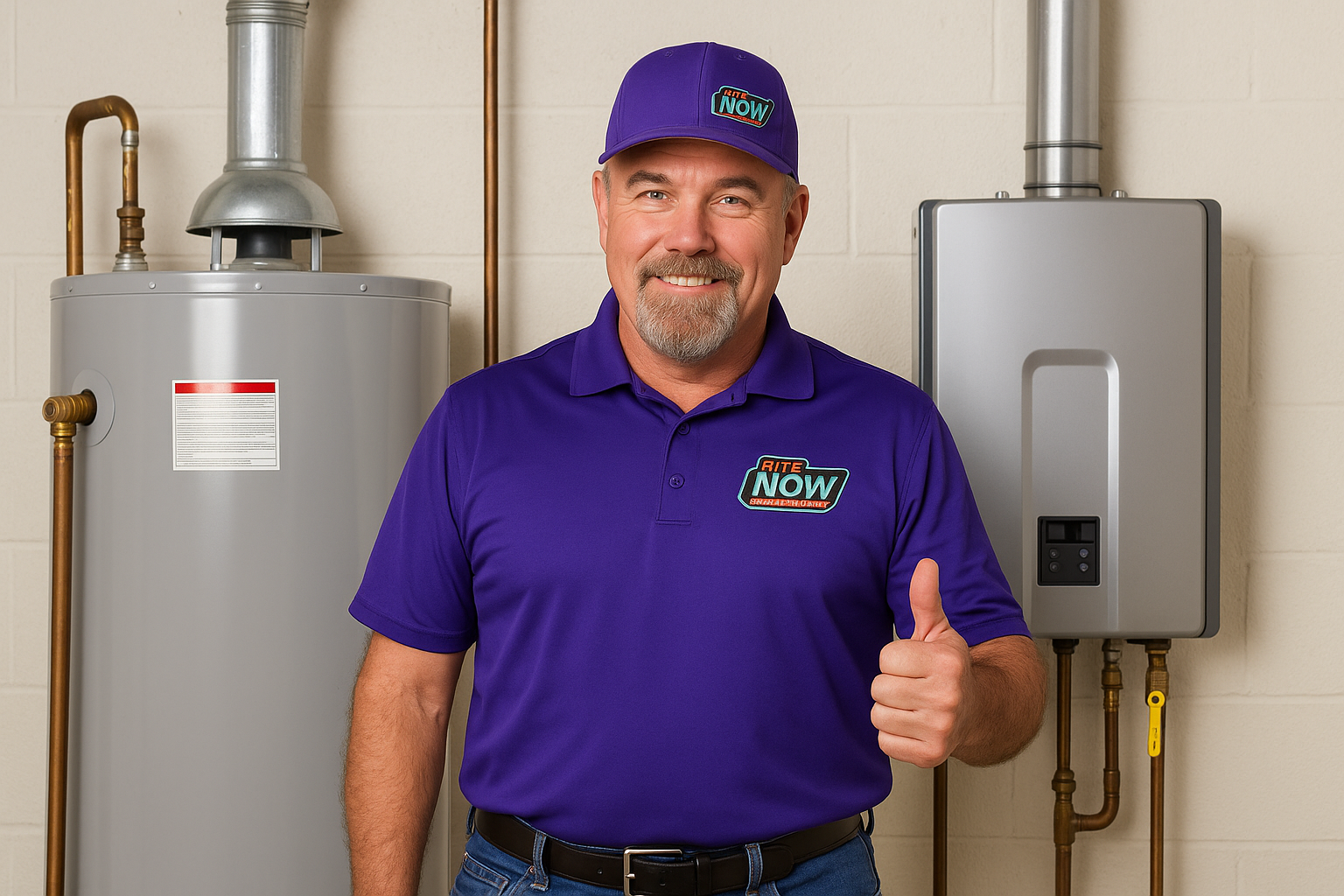
Traditional tank water heaters keep a huge amount of water (typically 30-80 gallons) in a tank. It keeps the water hot 24 hours a day, even when you are not using it. Whenever you switch your hot water tap, the hot tank water is always at the top, and cold water replenishes the tank. Although this system is easy to use, it may experience a shortage of hot water in case there are too many people using it simultaneously.
Tank Water Heater Advantages:
- Lower Initial Cost: Tank water heaters start at a fraction of the cost and may range, depending on the unit, between $400 and $1000.
- Simple Installation: These units are simpler and faster to install, which may lower labor expenses.
- Works for High Hot Water Demand: Tank heaters are more suitable in households with several people using hot water simultaneously (e.g., multiple showers or when operating the dishwasher).
Tank Water Heater Disadvantages:
- Energy Inefficiency: The tank keeps heating water, hence consumes more energy. This may result in increased power or gas bills.
- Limited Hot Water Supply: When the tank empties, you will have to wait until it warms up again..
- Takes Up Space: These units are large and need a special place in your house, such as a garage or utility room.
- Shorter Lifespan: The average life of tank water heaters is about 10-15 years, but with the proper care, these products can last longer.
Tankless Water Heaters
On the other hand, tankless water heaters don’t store water at all. These units heat water as it flows through them, providing hot water only when you need it. Because they operate on demand, there’s no risk of running out of hot water. This makes them a great option for households that require hot water continuously.
Tankless Water Heater Benefits:
- Energy Efficiency: Tankless water heaters only use energy when hot water is needed. This is potentially highly efficient in terms of energy conservation in the long run, and hence makes them more efficient (up to 34% efficient than conventional tanks).
- Endless Hot Water Supply: As long as your tankless unit is sized properly, you’ll never run out of hot water.
- Space-Saving Design: These are much smaller and can be attached to the wall, leaving the space in your home free.
- Longer Lifespan: Tankless heaters will have a lifespan of 20 or more years, which is twice the life of traditional tanks.
Tankless Water Heater Drawbacks:
- Higher Upfront Costs: The tankless units are more expensive, ranging from $1,000 to $3,000. You can also make extra payments in installments, including a gas line or electric upgrades.
- Installation Complexity: Installing a tankless water heater can be more complicated, especially if your home requires system upgrades to accommodate the unit.
- Potential Output Limitations: A tankless heater may not be able to satisfy the demand if there are several hot water outlets operating at the same time (e.g., two showers at the same time).
- More Complex Maintenance: While tank heaters require only annual flushing, tankless models need professional inspection and descaling, especially in areas with hard water.
Cost Comparison: Upfront, Installation, and Operating Costs
Upfront Costs:
- Tank Water Heaters: Tank water heaters are generally cheaper to install and generally cost between $400 and $1000.
- Tankless Water Heaters: Tankless water heater installation services in Denton, TXtypically cost $1,000 to $3,000, and they may require system upgrades, such as new gas lines or electrical work.
Installation Costs:
- Tank Water Heaters: It generally costs between $300 to 500 to install, and only a few adjustments are required to be done on your home plumbing and electrical systems.
- Tankless Water Heaters: The installation would cost between 1,000 to 3,000 dollars, depending on how complicated the upgrade can be.
Operating Costs:
Tankless water heaters save on energy costs by heating water only when necessary. According to the U.S. Department of Energy, they can be 24-34% more energy-efficient than tank models. Over time, this can result in savings of $100-$200 per year on your utility bills.
Here is a quick tank vs tankless comparison that will help you make a decision.
| Feature | Tank Water Heater | Tankless Water Heater |
| Hot Water Supply | Limited by tank capacity; may run out of hot water with high simultaneous use. | Provides an endless supply of hot water, ideal for back-to-back showers. |
| Space Requirements | Requires a large physical space (e.g., garage, utility room). | Compact, wall-mounted design saves floor space. |
| Maintenance | Simpler maintenance, mainly annual flushing to remove sediment. | More complex maintenance, requiring professional annual inspection and descaling, especially in hard water areas. |
| Water Usage Efficiency | Heats and stores water even when not needed, leading to higher energy use. | Only heats water when needed, leading to significant energy savings. |
| Installation Complexity | Easier and cheaper to install; minimal upgrades needed. | More complex installation; may require upgrades to gas lines or electrical systems. |
| Ideal for | Smaller households with limited upfront budgets or homes requiring large amounts of hot water at once. | Households that value long-term savings, space-saving design, and endless hot water. |
Final Thoughts
The debate of tank vs tankless water heater does have a right answer. At the end, the choice depends on your needs, area, and budget. However, if you want long-term energy savings, endless hot water, and a smaller unit, a tankless water heater could be a great investment for your Denton home. Still confused? Consult the experts at Rite NOW AC • Heating • Plumbing to make a decision. Not only will we help you choose the right unit for your home, but also provide premium installation and long-term maintenance services so you can enjoy hot water in your home for many seasons to come. Trust our HVAC & Plumbing Company in Denton, TX, once and become a part of our family forever.